

.png)

.png) Fitness & Excellence
Fitness & ExcellenceSports Curriculum
Nurturing athletic potential, discipline, and teamwork from Nursery to Grade 10.
Dept. of Integrated Sports
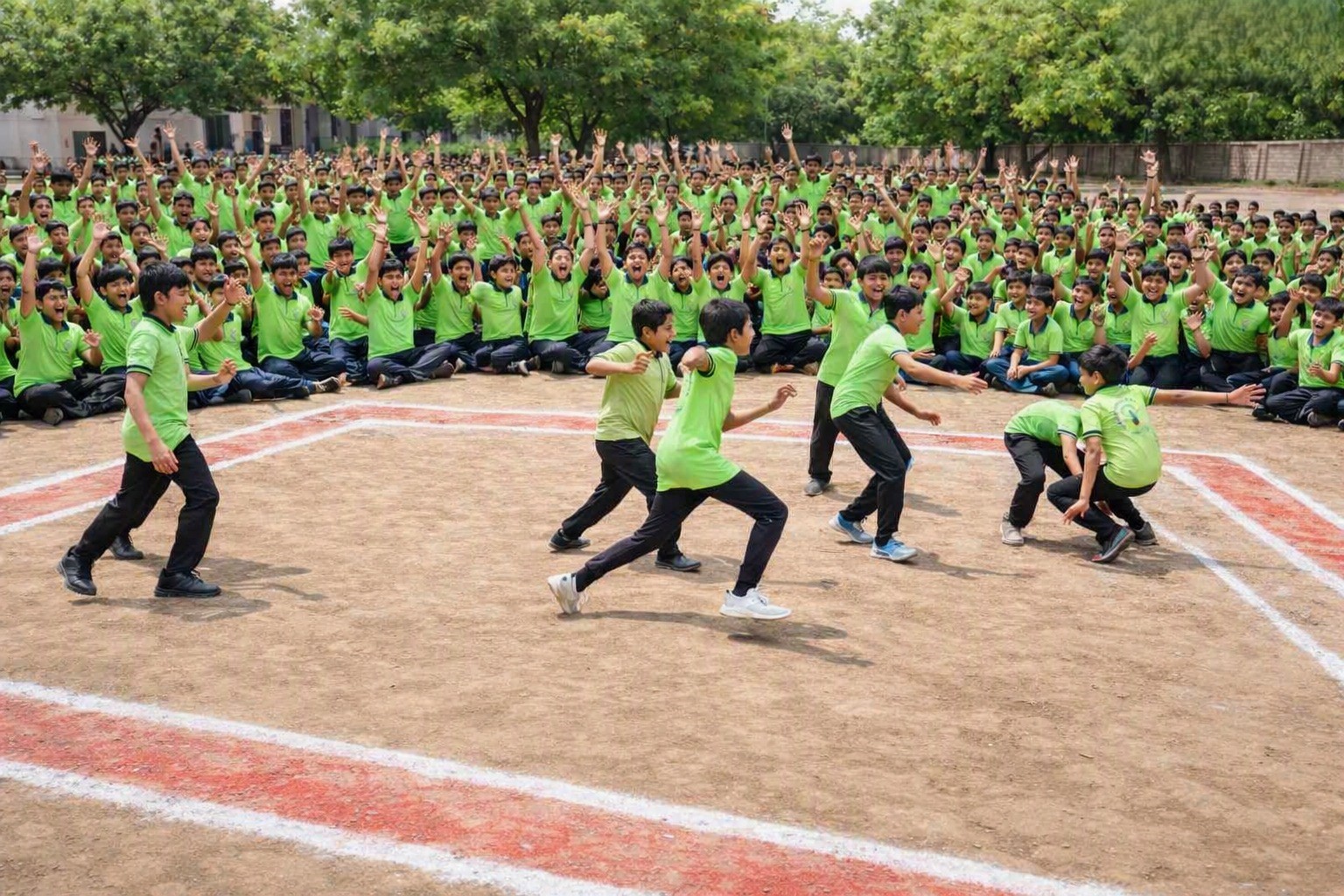
The curriculum offers structured programmes in athletics, team sports, individual games, fitness training, and yoga. Students engage in diverse sporting activities, participate in tournaments and workshops at regional, national and international levels, and develop resilience ensuring holistic growth through physical excellence and cultural enrichment.
VOur Vision
The Department of Sports and Physical Education envisions a dynamic environment where every child discovers and nurtures their athletic potential. Through structured programmes spanning Grades Nursery to 10, we aspire to cultivate discipline, teamwork, and lifelong fitness. Our vision is to empower students with confidence, enabling them to excel in sports, embrace healthy lifestyles, and contribute to society as resilient, collaborative, and health-conscious individuals.
MOur Mission
The Department of Sports and Physical Education is committed to fostering athletic exploration and holistic development. Our mission is to provide diverse opportunities in indoor and outdoor sports, encouraging students to train systematically, embrace innovation in fitness, and celebrate cultural heritage through traditional games. Through structured programmes, tournaments, and collaborative projects, we aim to nurture discipline, leadership, and resilience that enrich both personal growth and community engagement.
Curriculum Development Process
Foundations in Research-Driven Sports Pedagogy
Subject Matter Experts (SMEs) at the Head Office continuously research global trends in sports science, fitness methodologies, and coaching practices. They explore the practical utility of athletic skills in daily life and identify emerging career opportunities in sports industries. This research-driven approach ensures innovative, relevant, and future-ready programmes, empowering students to connect physical training with real-world applications and professional growth.
Applied Experiential Framework for Athletic Development
Guided by research insights, the Department designs engaging, age-appropriate training modules for students across Grades 1 to 9. Activities are tailored to developmental stages, ensuring younger learners build foundational fitness while older students explore advanced techniques, competitive strategies, and leadership. This hands-on approach fosters curiosity, confidence, and athletic growth, making learning both enjoyable and meaningful.
Integration of Interdisciplinary Pedagogies
Sports education is synthesized with health sciences, psychology, and academic disciplines. By embedding physical inquiry within science, nutrition, and social studies, students cultivate multidimensional perspectives and critical thinking. This interdisciplinary approach fosters intellectual rigor, resilience, and holistic development.
Sustained Professional Advancement in Sports Pedagogy
The Department prioritizes sustained faculty advancement through structured professional development initiatives. Regular workshops, scholarly seminars, and collaborative training programmes equip coaches with evolving methodologies and contemporary fitness practices. This systematic enrichment fosters reflective practice, enhances instructional quality, and ensures curricular innovation.
Global and Cultural Sporting Literacies
The Department cultivates students’ sporting literacies within global and cultural contexts. Through engagement with diverse athletic traditions, contemporary practices, and intercultural dialogues, learners develop sensitivity to varied modes of physical expression. This emphasis nurtures appreciation, broadens horizons, and prepares students to participate meaningfully in a globalized sporting world.
Institutional Standardization and Quality Assurance
Regional Sports Facilitators (RSFs) ensure quality and consistency across schools. They observe training sessions, provide constructive feedback, and guide coaches in implementing the curriculum effectively. By offering hands-on support, mentoring, and professional development, RSFs strengthen teacher confidence and enhance student outcomes.
Dimensions of Physical Education
Emphasizing ten fundamental dimensions—Strength, Endurance, Flexibility, Agility, Coordination, Balance, Speed, Strategy, Teamwork, and Discipline—as the cornerstone of athletic learning.
Annual Competitions
Vibrant exhibitions celebrating athletic achievements, highlighting cultural engagement, fostering collaboration, and promoting interdisciplinary connections.
Quality Infrastructure
Premium equipment, durable gear, and curated sports kits. Centrally produced lesson resources and fitness trackers ensure uniformity and rigor.
Faculty Enrichment
Continuous advancement through training programmes and workshops ensures coaches remain updated with evolving methodologies and digital innovations.
Applied Sports Laboratories
Providing a progressive framework of five modules to advance from foundational fitness to culminating competitions.
Foundational Fitness
Introduction to core physical principles and basic conditioning.
Cultural and Traditional Games
Study of indigenous sports and cultural influences.
Skill and Technique Development
Hands-on practice in team and individual sports.
Applied Sporting Practices
Linking sports to daily life, leadership, and career pathways.
Capstone Competitions
Culminating tournaments integrating strategy, innovation, and reflective critique.
Pedagogical Support Systems
Ensuring teaching and learning excellence through structured frameworks and continuous support.
Structured Faculty Development in Athletic Pedagogy
Structured workshops and seminars equip coaches with evolving strategies, contemporary methodologies, and reflective practices, ensuring they deliver innovative, student-centered, and scientifically grounded athletic instruction.
Centralized Resource Framework for Sporting Excellence
Centrally curated training materials, templates, and digital aids guarantee uniformity, quality, and equitable access, empowering both coaches and students with consistent academic and athletic support across institutions.
Comprehensive Evaluation Systems in Physical Education
Comprehensive evaluation integrates formative and summative methods, measuring physical growth, skill acquisition, and strategic understanding, while guiding personalized pathways for holistic athletic development and lifelong fitness.
Interdisciplinary Networks for Athletic and Academic Growth
Coaches and students engage in shared projects, peer critiques, and interdisciplinary dialogues, cultivating teamwork, mutual respect, leadership, and collective knowledge construction within sporting and academic contexts.
Digital Innovations in Sports Pedagogy
Digital platforms, fitness apps, performance trackers, and emerging technologies are embedded into pedagogy, expanding athletic possibilities, enhancing accessibility, and preparing learners for future-oriented sporting and professional landscapes.
Holistic Approaches to Resilience and Intrinsic Motivation
Initiatives nurture resilience, confidence, and intrinsic motivation, ensuring coaches and students thrive in supportive environments that balance physical rigor, emotional health, and personal growth.