
.png)

.png) Multilingual Competence
Multilingual CompetenceGlobal Languages & Communication Skills
Nurturing linguistic proficiency and intercultural understanding from Grade 1 to Grade 9.
Dept. of Global Languages
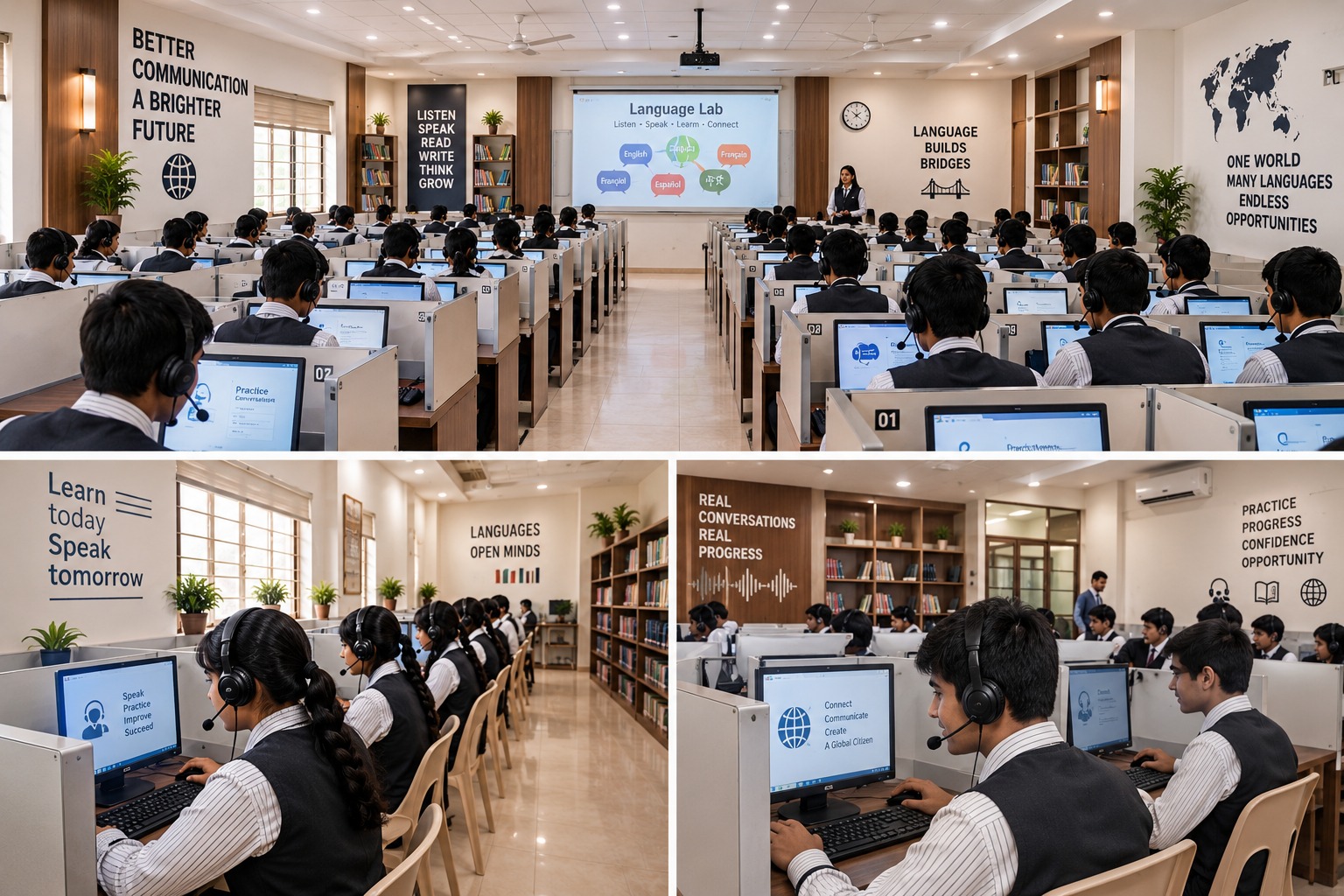
The curriculum offers courses in English, Hindi, Sanskrit, and Gujarati, with French and Spanish being introduced from the next academic year. Students engage in listening, speaking, reading, and writing activities, participate in debates, dramatizations, and language labs, and develop communicative confidence.
VOur Vision
The Department of Global Languages & Communication Skills envisions a dynamic learning environment where every child discovers the power of language as a tool for expression, connection, and cultural empathy. Through diverse courses spanning Grades 1 to 9, we aspire to cultivate fluency, critical thinking, and intercultural awareness. Our vision is to empower students with communicative confidence, enabling them to express ideas meaningfully, embrace linguistic diversity, and contribute to society as articulate, empathetic, and globally competent individuals.
MOur Mission
The Department of Global Languages & Communication Skills is committed to fostering linguistic exploration and holistic development across Grades 1 to 9. Our mission is to provide diverse opportunities in multiple languages, encouraging students to practice communication skills, embrace multilingualism, and celebrate cultural heritage. Through structured programmes, debates, dramatizations, and collaborative projects, we aim to nurture fluency, critical thinking, and expressive skills that enrich both personal growth and community engagement.
Curriculum Development Process
Linguistic Research Foundations
Our SMEs continuously research global trends in language pedagogy, communication strategies, and multilingual education. They explore practical utility and identify emerging career opportunities in translation, interpretation, and international relations.
Experiential Framework
Guided by research, we design engaging, age-appropriate projects. Younger learners build foundational vocabulary, while older students explore advanced communication, critical discourse, and intercultural dialogues.
Interdisciplinary Integration
We synthesize language learning with broader disciplines. By embedding communication within science, technology, literature, and social studies, students cultivate multidimensional perspectives and critical thinking.
Faculty Advancement
The department prioritizes sustained faculty advancement. Regular workshops, scholarly seminars, and collaborative training programmes equip educators with evolving pedagogical strategies and contemporary communication methodologies.
Global Literacies
Cultivating students' linguistic literacies within global and cultural contexts. Engagement with diverse languages, traditions, and intercultural dialogues develops sensitivity to varied modes of communication.
Standardization & Quality
Regional Language Facilitators (RLFs) ensure quality and consistency. They visit classrooms regularly to observe teaching practices, provide constructive feedback, and guide educators effectively.
Communicative Competence
Emphasizing the four fundamental skills—Listening, Speaking, Reading, Writing—as the cornerstone of communicative learning. Students engage in interactive projects exploring literature, grammar, and cultural texts.
Multilingual Exhibitions
Every year, students showcase linguistic achievements through debates, dramatizations, recitations, and multilingual exhibitions.
Standardized Resources
Carefully curated language kits containing grammar guides, vocabulary resources, and digital practice tools ensure uniformity and academic rigor.
Faculty Enrichment
Structured training programmes and scholarly workshops equip educators with evolving methodologies in language teaching.
Applied Communication Labs
Five progressive modules, each lasting three weeks, to ensure systematic skill development.
Linguistic Foundations
Introduction to core linguistic principles and basic communication.
Cultural Literacies
Study of diverse languages, dialects, and cultural influences.
Modalities of Expression
Practice with oral, written, digital, and performative communication.
Applied Practices
Linking language to daily life, media, and career pathways.
Capstone Projects
Culminating works integrating research, innovation, and reflective critique.
Pedagogical Support Systems
Ensuring teaching and learning excellence through structured frameworks and continuous support.
Educator Capacity Building
Structured workshops and seminars equip educators with evolving multilingual pedagogies, ensuring they remain updated with contemporary methodologies across diverse contexts.
Standardized Learning Resources
Centrally curated lesson materials, templates, and digital aids guarantee uniformity, quality, and equitable access across institutions worldwide.
Assessment and Evaluation Frameworks
Integrated formative and summative evaluation methods foster reflective practice, measure communicative growth, and guide personalized learning pathways.
Collaborative Learning Communities
Teachers and students engage in shared projects, peer critiques, and intercultural dialogues, cultivating teamwork and mutual respect within diverse environments.
Technological Integration
Language labs, multimedia tools, and emerging technologies are embedded into pedagogy, expanding communicative possibilities and preparing learners for future-oriented global contexts.
Well-Being and Confidence
Initiatives nurture resilience, confidence, and intrinsic motivation, ensuring educators and students thrive in supportive environments that balance linguistic rigor and personal growth.